
Eurodance: History, Radio Culture, Artists, Hits & Global Legacy
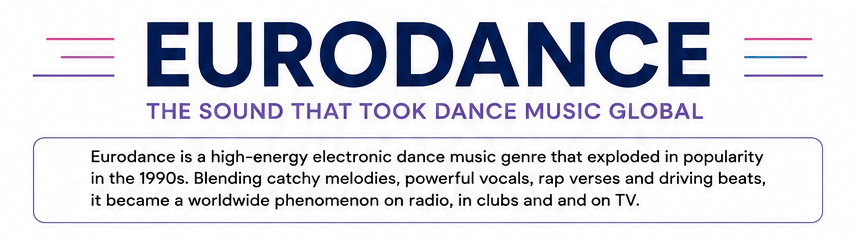
Eurodance is arguably one of the most commercially successful yet culturally fascinating subgenres in the history of electronic dance music. It systematically synthesized elements of Euro disco, Chicago house, Detroit techno, Hi-NRG, Italo disco, and early 1990s hip-hop into a highly regimented, radio-friendly pop structure that dominated airwaves throughout the 1990s and early 2000s.
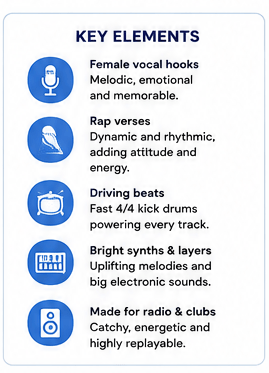
Known for its signature combination of uplifting female vocal hooks and energetic male rap verses, Eurodance became a global phenomenon. Emerging from a newly unified Germany, an innovative Italy, and pioneering Benelux countries, it successfully transitioned underground rave culture into a multi-million dollar mainstream industry that laid the foundations for modern Electronic Dance Music (EDM).
Quick Summary: Eurodance
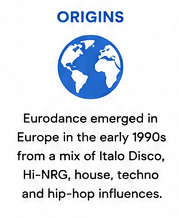
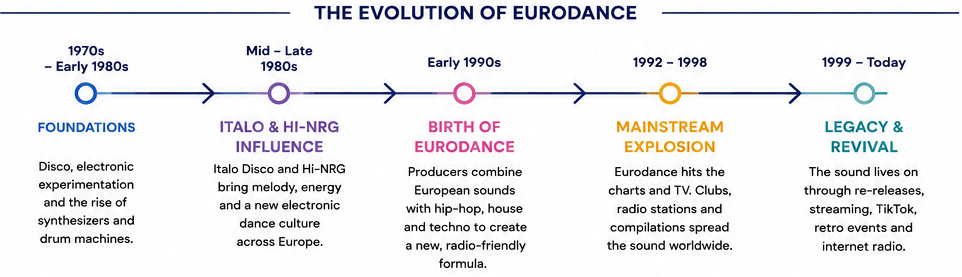
- Origin: Eurodance emerged in Europe in the early 1990s, evolving from a mix of Italo Disco, Hi-NRG, house, techno, and hip-hop influences.
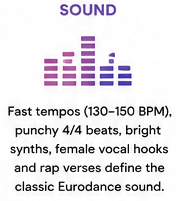
- Sound: Fast tempos (130 - 150 BPM), punchy 4/4 beats, bright synthesizers, and a signature combination of female vocal hooks and male rap verses.
- Golden Era: The genre reached its peak between 1992 and 1998, dominating European charts, clubs, and mainstream radio.
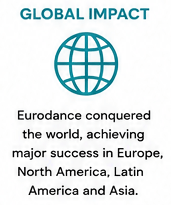
- Global Impact: Eurodance became a worldwide phenomenon, achieving major success in Europe, North America, Latin America, and parts of Asia.
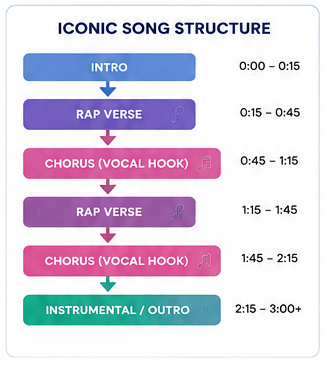
- Signature Formula: The classic structure combined energetic rap sections with uplifting, melodic choruses designed for both radio and clubs.
- Key Regions: Germany, Italy, and the Benelux countries were the main production hubs, each contributing a distinct sound and style.
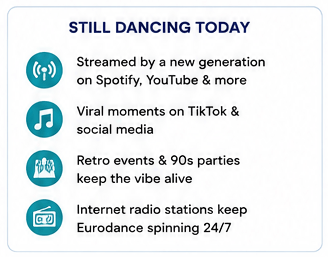
- Today: Eurodance remains popular through streaming platforms, TikTok revivals, retro playlists, and continuous internet radio stations like MixPerfect Radio.
What Is Eurodance? A Structural Analysis
From a musicological perspective, Eurodance is a high-energy electronic music genre that emerged in Europe in the early 1990s. It typically features fast tempos, melodic synthesizers, and a structure built for both clubs and radio compression.
| Element | Technical Specification | Functional Purpose |
|---|---|---|
| Tempo (BPM) | Typically ranges between 130 and 150 BPM. | Optimized for high-energy club dancing and 90s fitness culture. |
| Rhythm Pattern | Unforgiving 4/4 kick drum with accented off-beat hi-hats. | Derived from techno and house to maintain dancefloor momentum. |
| Vocal Dynamic | Melodic female sung chorus juxtaposed with rhythmic male rap. | Appealed to mainstream pop fans while retaining club credibility. |
| Thematic Content | Uplifting lyrics focusing on peace, love, unity, and dancing. | Reflected the optimistic post-Berlin Wall zeitgeist of 1990s Europe. |
Origins and Technological Foundations
The roots of Eurodance can be traced back to 1970s Euro-disco, spearheaded by pioneers like Giorgio Moroder. In the 1980s, this morphed into Italo Disco and Hi-NRG, which gifted Eurodance its accelerated tempos. By the early 1990s, the arrival of Chicago house music triggered a crucial mutation: Italo House, which injected electronic tracks with euphoric piano riffs and soaring diva vocals.
This musical evolution was amplified by the democratization of affordable home studio gear, allowing independent producers to compete directly with major labels using iconic instruments:
| Hardware | Signature Sound Profile | Notable Application / Impact |
|---|---|---|
| Korg M1 | "M1 House Piano" and crisp organ presets. | Formed the foundational piano hooks of almost all early 90s dance tracks. |
| Roland JD-800 | Bright, piercing, analog-style digital lead synths. | Used extensively to program the main driving melodies. |
| Roland D-50 | Warm, atmospheric pads and hybrid textures. | Created the tense, cinematic intros before the main beat dropped. |
Eurodance Around Europe: Key Regional Hubs
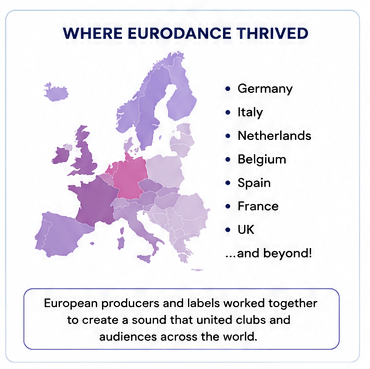
The expansion of Eurodance was driven by a handful of European countries that each contributed unique production styles:
Germany: The Production Center
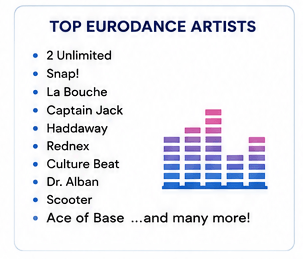
Following the fall of the Berlin Wall, Germany became the engine of the genre. Frankfurt, Cologne, and Hamburg produced massive, techno-influenced acts like Culture Beat, Snap!, Masterboy, Real McCoy, and La Bouche.
Italy: Melodies and Dancefloor Emotion
Italy shaped the emotional side of Eurodance. Relying on their strong Italo Disco heritage, producers like Robyx utilized catchy keyboard hooks and uplifting chord progressions, breaking global acts like Corona.
Netherlands & Belgium: Commercial Savvy
The Benelux region combined heavy underground rave sounds (like Belgian New Beat) with massive commercial structures. This ecosystem birthed 2 Unlimited - one of the most successful Eurodance projects in history - and built international distribution networks that later paved the way for the trance boom.
Sweden: Scandinavian Pop Sensibility
Swedish producers, heavily influenced by contexts like Denniz Pop's Cheiron Studios, brought sophisticated pop songwriting structures to the genre, guiding the sound of E-Type and crossover icons like Ace of Base.
How Eurodance Became Popular on Radio and TV
Eurodance did not become a global success by accident; its explosion was amplified by a highly efficient media feedback loop. In Germany, the Benelux, and Italy, local club DJs would test promo tracks on the dancefloor. Tracks that generated the highest crowd response were quickly picked up by regional FM networks (such as Energy Berlin) and put on heavy rotation, pushing club tracks into the mainstream charts.
Influential Eurodance Radio Stations (1990s - 2000s)
- Energy FM (Germany): Key driver of early Eurodance rotation in clubs and FM crossover.
- Radio 538 (Netherlands): Helped push 2 Unlimited and Vengaboys into mainstream charts.
- Studio Brussel (Belgium): Bridge between underground rave and commercial dance.
- Radio Deejay (Italy): Major supporter of Italo House Discogs style archiveItalo House and early Eurodance crossover.
These stations played a crucial role in bridging underground club culture with mainstream radio audiences across Europe.
Simultaneously, music television networks like MTV Europe, VIVA, and TMF transformed faceless studio projects into recognizable icons. The vibrant fashion - neon clothing, futuristic sportswear - and high-energy dance choreography became a core visual staple of 1990s youth culture. This was accompanied by massive sales of multi-disc compilation albums (like Now That's What I Call Music! or Bravo Hits), which acted as early physical playlists for the mass market.
Key Record Labels and Producers That Defined Eurodance
Behind every Eurodance hit stood influential record labels and producers who shaped the sound, distribution, and global success of the genre.
- ZYX Music (Germany): Major distribution label responsible for spreading Eurodance across Europe through countless club and compilation releases.
- Byte Records (Belgium): Key Benelux label behind global hits from 2 Unlimited, helping define the commercial Eurodance sound.
- Logic Records (Germany): Important early home of Snap! and crossover house productions that shaped early 90s club music.
- Frank Farian: German producer behind the success of La Bouche - Be My Lover, known for highly polished vocal-driven dance productions.
- Alex Christensen: German producer and composer behind projects like U96, helping define the darker techno-influenced side of Eurodance and early Culture Beat productions.
- Robyx (Roberto Zanetti): Italian producer behind acts like Corona - The Rhythm of the Night and Ice MC - Think About the Way, combining Italo melodies with Eurodance structure.
Golden Era of Eurodance (1992 - 1998)
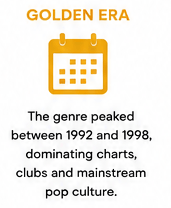
During this peak period, Eurodance dominated European singles charts, achieved massive Billboard success in North America, and grew exceptionally popular across Latin America and Asia (particularly Japan), making it one of the most commercially dominant electronic movements of the late twentieth century.
Eurodance Evolution and the Digital Revival
By the early 2000s, audiences grew fatigued by the rigid vocal-and-rap formula. The sound mutated into Hands Up (Euro-Trance) in Germany - led by acts like Groove Coverage and later Cascada - and sparked an energetic Italodance revival.
Today, Eurodance experiences a significant digital renaissance. Short-form video algorithms on platforms like TikTok, Instagram Reels, and YouTube Shorts regularly propel 90s hooks into viral status, introducing the genre as high-energy "retro motivation music" to a brand new generation of streaming listeners.
Essential Eurodance Videos (YouTube Classics)
These iconic Eurodance tracks shaped the sound and visual identity of 1990s dance music and continue to dominate retro playlists and internet radio streams.
2 Unlimited - No Limit
Considered one of the defining Eurodance anthems of the 1990s, “No Limit” became a breakthrough hit for 2 Unlimited and dominated European charts, radio stations, and clubs.
Snap! - Rhythm Is A Dancer
Widely credited with shaping the classic Eurodance blueprint, this track fused rhythmic rap sections with soaring vocal hooks that would become a defining sound of the 1990s.
Corona - The Rhythm of the Night
This Italo House influenced Eurodance classic became a major club and radio anthem across Europe in the mid-90s.
Haddaway - What Is Love
One of the most iconic Eurodance tracks ever released, it continues to dominate retro playlists, DJ sets, and nostalgic radio programming worldwide.
La Bouche - Be My Lover
A prime example of Eurodance’s vocal-focused production style, this track helped shape the sound of mid-90s commercial dance music across Europe and beyond.
Modern Internet Radio & MixPerfect Radio
While terrestrial FM radio gradually reduced its focus on Eurodance, internet radio created a new space where the genre could survive and evolve. However, most online stations rely on static playlists or pre-programmed rotations rather than true continuous mixing.
MixPerfect Radio is the platform behind this website, built specifically for continuous, non-stop DJ-style mixing of Eurodance, Italo House, and retro dance music. Instead of static playlists or shuffled tracks, the system creates a seamless flow where every track is harmonically blended into the next.
This approach closely mirrors the experience of a 1990s club night, where transitions, energy levels, and musical progression are curated in real time rather than algorithmically assembled.
As a result, MixPerfect Radio stands out as a rare example of internet radio that preserves the authentic mixing culture of the Eurodance era.
Top 50 Eurodance Tracks (Essential Historical Reference)
This curated list reflects chart performance, technological influence, and long-term cultural impact within the modern retro dance community.
| No. | Artist / Project | Track Title | Regional Profile |
|---|---|---|---|
| 1 | 2 Unlimited | No Limit | Benelux / Global Hit |
| 2 | 2 Unlimited | Get Ready For This | Benelux / Sports Anthem |
| 3 | 2 Unlimited | Tribal Dance | Benelux |
| 4 | 2 Unlimited | Twilight Zone | Benelux |
| 5 | Culture Beat | Mr. Vain | Germany (Frankfurt Techno) |
| 6 | Snap! | Rhythm Is A Dancer | Germany (Early Blueprint) |
| 7 | Snap! | The Power | Germany (Hip-House Hybrid) |
| 8 | Haddaway | What Is Love | Germany / Global Crossover |
| 9 | Corona | The Rhythm Of The Night | Italy (Italo House Piano) |
| 10 | La Bouche | Be My Lover | Germany (Vocal House) |
| 11 | La Bouche | Sweet Dreams | Germany |
| 12 | Real McCoy | Another Night | Germany (US Billboard Success) |
| 13 | Real McCoy | Run Away | Germany |
| 14 | Mr. President | Coco Jamboo | Germany (Euro-Reggae Fusion) |
| 15 | Scatman John | Scatman (Ski-Ba-Bop-Ba-Dop-Bop) | Germany / Jazz-Dance Hybrid |
| 16 | Vengaboys | Boom, Boom, Boom, Boom!! | Netherlands (Late-Era Pop) |
| 17 | Vengaboys | We’re Going To Ibiza! | Netherlands |
| 18 | Vengaboys | Up & Down | Netherlands |
| 19 | Captain Jack | Captain Jack | Germany (Military Concept) |
| 20 | Captain Jack | Drill Instructor | Germany |
| 21 | Masterboy | Feel The Heat Of The Night | Germany (Classic Formula) |
| 22 | Masterboy | Anybody (Movin’ On) | Germany |
| 23 | E-Type | This Is The Way | Sweden (Denniz Pop Influence) |
| 24 | E-Type | Set The World On Fire | Sweden |
| 25 | DJ Bobo | Somebody Dance With Me | Switzerland |
| 26 | DJ Bobo | Love Is All Around | Switzerland |
| 27 | DJ Bobo | Let The Dream Come True | Switzerland |
| 28 | Fun Factory | Close To You | Germany |
| 29 | Fun Factory | I Wanna B With U | Germany |
| 30 | La Bouche | Fallin’ In Love | Germany |
| 31 | Maxx | Get-A-Way | Germany (Harder Rave Edge) |
| 32 | Maxx | No More (I Can’t Stand It) | Germany |
| 33 | Haddaway | Life | Germany |
| 34 | 2 Brothers On The 4th Floor | Dreams (Will Come Alive) | Netherlands (Euro-Trance Melodies) |
| 35 | 2 Brothers On The 4th Floor | Never Alone | Netherlands |
| 36 | Ace of Base | All That She Wants | Sweden (Reggae-Pop/Adjacent) |
| 37 | Ace of Base | The Sign | Sweden |
| 38 | Ace of Base | Beautiful Life | Sweden (Direct Eurodance Sound) |
| 39 | Rednex | Cotton Eye Joe | Sweden (Country-Dance Novelty) |
| 40 | Dr. Alban | It’s My Life | Sweden (Afro-Dance Fusion) |
| 41 | Dr. Alban | Sing Hallelujah! | Sweden |
| 42 | Cappella | U Got 2 Let The Music | Italy (Media Records Studio) |
| 43 | Cappella | Move On Baby | Italy |
| 44 | ATC | Around The World (La La La La La) | Germany (Late-Era Crossover) |
| 45 | Ice MC | Think About The Way | Italy (Robyx Production) |
| 46 | Ice MC | It’s A Rainy Day | Italy |
| 47 | Whigfield | Saturday Night | Italy / UK Chart Phenomenon |
| 48 | Robin S | Show Me Love | USA / Heavy European Influence |
| 49 | Technotronic | Pump Up The Jam | Belgium (Foundational Proto-Sound) |
| 50 | 20 Fingers | Short Dick Man | USA (Club/Crossover Success) |
Final Thoughts
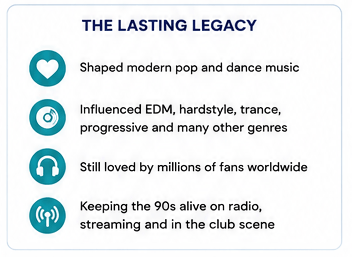
Eurodance remains one of Europe’s most influential and resilient electronic music movements. Its core strengths - clarity, intense emotional energy, and melodic accessibility - allowed it to cross borders and generations, writing the definitive production rulebook that modern electronic dance music follows to this day.
