
Italo House Radio - The History of Italy’s Legendary Piano House Sound
Italo House is one of the most important and influential dance music genres ever created in Europe. Emerging from Italy during the late 1980s, the genre combined American house rhythms with emotional piano melodies, uplifting vocals, Mediterranean atmospheres, and the melodic traditions of Italo Disco.
During the golden age of European dance music, Italo House dominated clubs, radio stations, beach resorts, Ibiza terraces, and dance charts throughout Europe and beyond. The genre became famous for its euphoric piano riffs, soulful diva vocals, and warm summer energy that made listeners instantly recognize the unmistakable “Italian House” sound.
Before streaming services and social media existed, Italo House spread rapidly through FM dance radio, cassette recordings, pirate stations, underground DJs, and club culture. Radio stations across Italy, the United Kingdom, Spain, Germany, the Netherlands, Belgium, and many other countries played Italo House heavily during the late 1980s and early 1990s.

Today, classic Italo House still lives on through retro dance festivals, vinyl collectors, old-school DJs, specialist radio stations such as MixPerfect Radio, where listeners continue to enjoy classic piano house anthems, Dream House classics, Balearic house tracks, and timeless Italian dance productions.
Quick Summary: Italo House Radio
- Origin: Italo House emerged in Italy during the late 1980s as Italian producers combined American house music with melodic European dance influences.
- Sound: Uplifting piano riffs, soulful vocals, warm synthesizers, Balearic atmospheres, and energetic house grooves designed for clubs and radio.
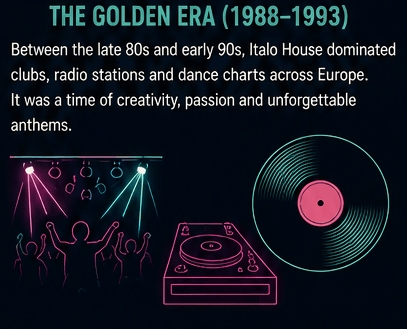
- Golden Era: The genre reached its commercial peak between roughly 1988 and 1993, dominating European dance floors and summer nightlife.
- Club Culture: Italo House became strongly connected to Ibiza, Mediterranean beach clubs, open-air parties, and European rave culture.
- Famous Artists: Major projects included Black Box, 49ers, Cappella, FPI Project, Sueño Latino, Double Dee featuring Dany, MCJ featuring Sima, and Club House.
- Legendary Labels: Labels such as Media Records, Dance Floor Corporation Records (DFC), Italian Style Productions, Disco Magic Records and DJ Movement Records helped spread the genre worldwide.
- Radio Success: Italo House received massive airplay on European dance radio stations and became one of the first house styles to achieve mainstream chart success.
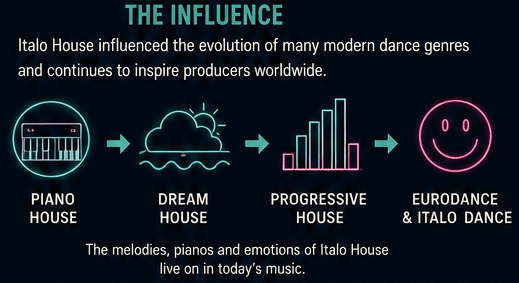
- Influence: The genre helped shape Piano House, Dream House, Progressive House, Eurodance, and later Italo Dance.
- Today: Classic Italo House remains popular among DJs, vinyl collectors, retro dance fans, and specialist stations such as MixPerfect Radio.
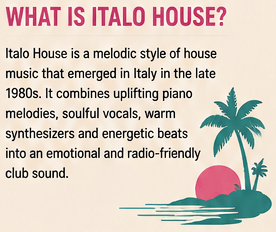
What Is Italo House?
Italo House is a melodic subgenre of house music that originated in Italy during the late 1980s. The style blended the rhythmic foundation of Chicago House with Italian melodic songwriting, emotional piano arrangements, soulful vocals, and commercial accessibility.
The genre quickly became known for its uplifting and euphoric sound. Unlike darker underground house music from the United States, Italo House focused on positivity, melody, atmosphere, and emotional energy.
The sound was often characterized by:
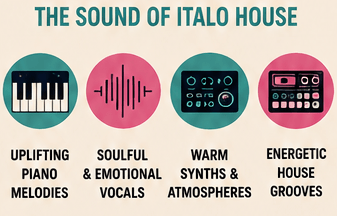
- Powerful Korg M1 piano riffs
- Warm synthesizer pads
- 4/4 house grooves
- Soulful female vocals
- Balearic summer atmospheres
- Emotional chord progressions
- Melodic basslines
- Radio-friendly arrangements
- Club-oriented energy
- Bright Mediterranean vibes
Italo House became one of the first house music styles to successfully cross over from underground club culture into mainstream European radio and commercial charts.
The Italo Disco Roots of Italo House
The origins of Italo House can be traced directly back to Italo Disco, the electronic dance genre that dominated much of Europe during the early and mid-1980s.
Italian producers had already built a reputation for creating highly melodic electronic music using synthesizers, drum machines, vocoders, sequencers, and catchy choruses. Labels such as Time Records, Discomagic, and Memory Records helped establish Italy as one of Europe’s most important dance music exporters.
Italo Disco emphasized:
- Melody
- Emotion
- Catchy hooks
- Electronic production
- Danceable grooves
When Chicago House music started spreading internationally during the mid-to-late 1980s, Italian producers naturally began combining these new house rhythms with the melodic traditions they already understood from Italo Disco.
This fusion eventually created the recognizable sound now known as Italo House.

How Italo House Started
During the second half of the 1980s, American house music was becoming increasingly popular in European clubs. DJs imported records from Chicago and New York while experimenting with new electronic production techniques.
Italian producers admired the groove and simplicity of Chicago House but felt the music could become more melodic and emotional. They started adding:
- Piano melodies
- Gospel-inspired vocals
- Layered synthesizers
- Italian melodic arrangements
- Balearic influences
By 1988 and 1989, this new style exploded throughout Europe. Some of the earliest Italo House tracks became enormous club hits and rapidly entered mainstream charts.
Unlike underground American house, Italo House appealed to both club audiences and mainstream radio listeners, helping house music become commercially accepted across Europe.
The Early Sound of Italo House
Early Italo House productions had a very recognizable sound. The music felt uplifting, emotional, soulful, and warm. Producers relied heavily on digital piano sounds, especially the famous Korg M1 piano preset that became one of the defining sounds of 1990s dance music.
Tracks were designed to create euphoric moments on dance floors while remaining melodic enough for daytime radio play.
Typical early Italo House tracks featured:
- Large piano stabs
- Simple but effective basslines
- Loop-based structures
- Soulful diva vocals
- Classic Roland drum machine sounds
- Open hi-hats and percussion grooves
- Balearic melodies
- Positive emotional atmospheres
Many productions also borrowed techniques from disco, funk, soul, and gospel music.
Unlike aggressive techno styles emerging in Germany and Belgium during the same period, Italo House remained melodic and accessible.
Italo House on Radio Stations
Radio was one of the biggest reasons for the international success of Italo House. During the late 1980s and early 1990s, Europe experienced a massive growth in commercial FM broadcasting and dance-oriented radio stations.
In Italy, private radio stations heavily supported dance music culture. Some of the most important stations included:
- Radio Deejay
- Radio Italia Network
- Radio 105
- Discoradio
- RTL 102.5
These stations regularly played:
- Italo House
- Chicago House
- Dream House
- Eurodance
- Balearic House
Outside Italy, the genre became extremely popular on:
- UK pirate radio stations
- Ibiza club radio
- Dutch dance stations
- Belgian club radio
- German dance FM broadcasts
- Late-night European dance programs
In the United Kingdom, many DJs referred to the genre simply as “Italian House” because so many major dance hits came directly from Italian producers and labels.
Italo House tracks became essential music for:
- Beach parties
- Summer tourism destinations
- Open-air clubs
- Ibiza terraces
- Late-night dance radio
- Underground rave culture
Even today, classic Italo House remains popular on retro dance stations and online streams such as MixPerfect Radio, where listeners can still experience the timeless sound of classic Italian piano house music.
Countries and Continents Where Italo House Became Popular
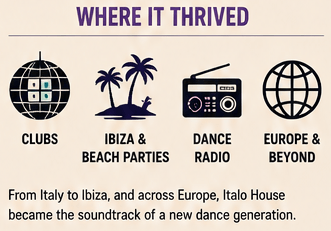
Although Italo House was born in Italy, its impact quickly spread far beyond national borders. The genre became a truly international movement thanks to radio airplay, club culture, record exports, DJ networks, and the rapidly growing European dance scene of the late 1980s and early 1990s.
Each country interpreted Italo House slightly differently, but everywhere it arrived, it contributed to the evolution of local dance culture and helped shape the global rise of house music.
Italy
Italy was the undisputed birthplace and creative center of Italo House. The country already had a strong foundation in electronic music through Italo Disco, which made the transition to house music a natural evolution for many producers.
Italian clubs in cities like Milan, Rome, and Rimini became testing grounds for new productions. DJs were closely connected to record labels, allowing tracks to move quickly from studio to dancefloor.
Italian radio stations played a crucial role as well, helping transform club tracks into national hits. The synergy between clubs, radio, and record labels made Italy the engine of the entire movement.
Italy also became home to many influential labels and production teams that exported Italo House across Europe.
United Kingdom
The United Kingdom became one of the most important international markets for Italo House. British club culture in the late 1980s was rapidly evolving, with acid house, rave culture, and underground dance scenes all growing at the same time.
Italian productions stood out because of their strong melodic identity and emotional piano-driven sound. Many tracks crossed over into the UK charts, often surprising audiences who were used to more minimal or acid-influenced styles.
UK radio stations and pirate radio networks helped spread Italo House further, while club DJs incorporated Italian tracks into peak-time sets alongside local house and rave music.
This cross-pollination helped influence the rise of Piano House and UK garage-influenced dance styles later in the decade.
Spain and Ibiza
Spain, and especially Ibiza, became one of the most iconic global hubs for Italo House. The island’s open-air clubs, sunset sessions, and Balearic atmosphere perfectly matched the emotional and sunny character of Italian dance music.
DJs in Ibiza embraced Italo House as part of a wider “Balearic” philosophy, where different genres were mixed freely based on mood rather than strict style categories.
Tracks from Italian producers became essential in beach clubs, terrace venues, and sunrise sets, often forming the emotional highlight of DJ performances.
Ibiza helped transform Italo House from a European trend into a global lifestyle sound associated with summer, freedom, and open-air dance culture.
Germany
Germany played a key role in the expansion of Italo House through its powerful club infrastructure and rapidly growing electronic music industry.
German DJs and radio stations embraced Italian imports because of their strong production quality and emotional appeal, which complemented both club and commercial formats.
The German electronic scene, which was also developing techno and trance at the time, benefited from the contrast between harder underground sounds and melodic Italian house music.
This helped create a balanced dance ecosystem where Italo House influenced both mainstream and underground club culture.
Netherlands and Belgium
The Netherlands and Belgium became major supporters of Italo House during the early 1990s. Both countries had strong club scenes and highly influential DJs who were quick to adopt new European dance trends.
Dutch radio stations, record shops, and club DJs played a significant role in spreading Italian house records throughout the Benelux region.
Belgium, with its early rave and new beat culture, also embraced the melodic and energetic aspects of Italo House, integrating it into club nights and underground events.
The region became an important stepping stone between Southern European melodic house and Northern European rave culture.
France
France developed a strong appreciation for Italo House through both club culture and radio broadcasting. French DJs were particularly drawn to the emotional and melodic qualities of Italian productions.
In France, Italo House was often blended with:
- Deep house
- Balearic influences
- Progressive club sounds
- French disco and electronic styles
This fusion helped shape the early French house movement and contributed to the development of later French electronic artists and labels.
South America
South America, especially Brazil and Argentina, became strong supporters of melodic European dance music during the 1990s.
Italian house records were widely imported through DJs, radio shows, and compilation albums, where they quickly gained popularity in clubs and beach party scenes.
The emotional and uplifting nature of Italo House resonated strongly with South American club culture, which already had a tradition of passionate and rhythmic dance music.
Many Italian productions became long-lasting favorites in Latin American nightlife.
Japan
Japan became one of the most dedicated international markets for Italian dance music. The country developed a deep appreciation for melodic electronic styles, including Italo House, Eurobeat, and later Italo Dance.
Japanese clubs, compilations, and record labels helped preserve and promote Italian dance music long after its peak in Europe.
The Japanese market also played a major role in sustaining the careers of many Italian producers, especially in the Eurobeat and high-energy dance scenes.
Even today, Japan remains an important cultural hub for collectors and fans of classic Italian electronic music.
Global Legacy
Beyond these core regions, Italo House influenced dance scenes across North America, Eastern Europe, and Australia. While not always commercially dominant, the genre contributed to the global language of house music.
Its melodic structure, piano-driven energy, and emotional approach became a blueprint for countless later styles in electronic dance music.
Famous Italo House Artists and Their Biggest Hits
Italo House was not built around traditional bands, but around studio projects, producers, and vocal collaborations. This production-driven approach allowed Italian dance music to evolve quickly and dominate European clubs, radio stations, and compilation markets during the late 1980s and early 1990s.
The genre became a key export of Italian electronic music, influencing everything from Piano House and Eurodance to progressive club music and Balearic DJ culture.
Black Box
Black Box became the global breakthrough of Italo House. Produced by Daniele Davoli, Mirko Limoni, and Valerio Semplici, the project defined the blueprint for commercial European house music.
Ride on Time became a worldwide phenomenon, built on powerful sampled diva vocals, driving piano stabs, and a raw club energy that perfectly captured the early house movement.
The group’s success proved that Italian productions could compete directly with US house music while developing a distinct European identity. Their sound became essential on radio playlists, Ibiza sets, and UK club charts.
- Everybody Everybody
- Fantasy
- I Don’t Know Anybody Else
- Strike It Up
- Open Your Eyes
49ers
The 49ers represented the emotional core of Italo House, combining piano-driven melodies with soulful vocal performances and strong radio appeal.
Their hit Touch Me became one of the defining piano-house records of the era, heavily played in European clubs and commercial radio formats.
Connected to Gianfranco Bortolotti’s production network, the project helped shape the polished, melodic direction that later influenced Eurodance.
- Die Walküre
- Girl To Girl
- Move Your Feet
- I Need You
Cappella
Cappella started within the Italo House ecosystem but quickly evolved into one of the most successful Eurodance acts of the 1990s.
Their sound combined Italo House piano energy with rave elements, rap sections, and strong commercial hooks designed for international charts and MTV exposure.
The project became a perfect example of how Italian house music transitioned from underground club culture into mainstream European pop-dance dominance.
- Everybody
- Move On Baby
- U Got 2 Let The Music
- Take Me Away
- Tell Me The Way
FPI Project
FPI Project introduced a more atmospheric and Balearic-oriented side of Italo House, focusing on mood, emotion, and Ibiza-inspired club culture.
Their classic Rich in Paradise became a defining record of early Balearic house, frequently played by DJs in beach clubs and sunrise sets.
The project helped bridge Italo House with deeper club styles, influencing both ambient house and early progressive sounds.
Sueño Latino
Sueño Latino played a pioneering role in shaping the emotional and atmospheric side of Italian dance music.
By blending ambient textures with hypnotic house rhythms, the project created an early blueprint for Dream House and Balearic club music.
Their productions were widely supported by Ibiza DJs and underground European selectors seeking more cinematic and emotional dance music.
- Dream House
- Ambient House
- Balearic House
- Progressive House
Don Carlos
Don Carlos represents the deeper, jazz-influenced side of Italian house music, focusing on musicality rather than commercial structure.
His productions combined Balearic atmospheres, jazz harmony, and deep house grooves, making them highly respected in underground DJ culture.
- Deep House
- Balearic House
- Dream House
- Progressive House
Secchi feat. Orlando Johnson
Secchi feat. Orlando Johnson represented a more soulful and musically refined direction within the broader Italian house movement. The project blended elements of jazz, funk, R&B, and early Italo House production techniques, standing apart from the more piano-driven club anthems of the era.
Their standout track I Say Yeah became a respected underground classic thanks to its deep groove, warm instrumentation, and powerful vocal performance by Orlando Johnson. The track was widely supported by DJs who preferred soulful and groove-oriented house music over commercial piano anthems.
This project is often regarded as part of the foundation of European soulful house, influencing later deep house and jazz-influenced club productions.
MCJ featuring Sima
MCJ featuring Sima became known for energetic and uplifting Italo House productions that combined emotional piano lines with strong, soulful female vocals.
Their tracks were widely played in European clubs and radio shows during the early 1990s, representing the more melodic and accessible side of the Italian house movement.
The project helped reinforce the signature Italo House formula: emotional vocals, piano-driven hooks, and strong dancefloor energy designed for both club systems and mainstream radio.
Double Dee featuring Dany
Double Dee featuring Dany played an important role in the early development of European house music with their classic track Found Love.
The production combined soulful vocals, smooth grooves, and melodic arrangements that reflected the transition from underground Chicago-inspired house to a more European, radio-friendly sound.
Their music helped establish the blueprint for many later Italo House and Euro-house productions.
Jinny
Jinny delivered energetic female-fronted Italo House and Eurodance crossover tracks that became popular across European clubs and dance radio stations.
Their hit Keep Warm is still considered a classic example of early 90s Italian dance music, combining strong vocals, catchy melodies, and uplifting club production.
Double You
Double You achieved worldwide success by combining Italo House-inspired production with strong pop sensibilities and radio-friendly arrangements.
Their breakthrough hit Please Don’t Go became an international chart success, helping Italian dance music gain massive global exposure in the early 1990s.
U.S.U.R.A.
U.S.U.R.A. introduced a darker and more aggressive sound to the Italian dance scene, blending techno, rave, and early house influences.
Their track Open Your Mind became a defining club anthem, known for its futuristic production style and spoken vocal sample, and it strongly influenced the development of European techno and trance music.
Club House
Club House was an Italian project known for combining disco influences with early house production, often reinterpreting well-known songs for the dancefloor.
Their early release Do It Again / Billie Jean (1983) was originally a disco-oriented medley, predating the Italo House movement but later associated with the evolution toward dance reinterpretations of classics.
During the early 1990s, Club House transitioned into full house production with tracks such as I Am Alone, Deep in My Heart, and I'm a Man / Yé Ké Yé Ké, which became popular in clubs and on European dance radio.
This evolution reflects how Italian producers moved from disco-influenced reinterpretations toward full Italo House and Euro-house production styles.
Antico
Antico became known for the Balearic classic We Need Freedom, a track that combined emotional piano lines with spiritual vocal elements and deep atmospheric production.
The project is often associated with the more introspective and emotional side of early Italian house music, widely supported by Ibiza DJs and Balearic selectors.
R.A.F.
R.A.F. was an early 90s Italian dance project from the Media Records network, strongly linked to producer Mauro Picotto in the beginning of his career. The project was part of the collective studio system led by Gianfranco Bortolotti, where multiple producers worked under shared aliases.
The track We Gonna Get... (1991) became a European club hit and is considered one of the early crossover records between Italo House, rave, and techno. Its raw energy and minimal structure made it popular in underground DJ sets across Europe.
Released under the credit R.A.F. by M. Picotto, the project continued with influential tracks such as Just Take Me Higher and Move Up, strengthening its presence in the early European club scene.
The R.A.F. alias eventually evolved as Mauro Picotto moved toward a solo career, developing his own identity in later years while expanding into techno and progressive dance music.
Legendary Italo House Producers and Studio Masterminds
The sound of Italo House was not created by traditional bands, but by a small group of powerful producers and studio networks. These figures controlled entire ecosystems of aliases, vocalists, and project names, producing hundreds of tracks under different identities.
Gianfranco Bortolotti
Gianfranco Bortolotti was the central figure behind the Media Records empire and one of the most influential architects of Italian dance music. He helped structure a production system where entire projects were created in studios and released under multiple aliases.
His network was responsible for major Italo House and Eurodance acts such as:
- Cappella
- 49ers
- Anticappella
- Club House
This factory-style approach became a defining feature of Italian dance music in the early 1990s.
Roberto Zanetti (Savage)
Roberto Zanetti, also known as Savage, started in Italo Disco before expanding into Eurodance and commercial dance production. He became known for combining strong melodic songwriting with accessible electronic arrangements.
His influence helped bridge:
- Italo Disco
- Eurodance
- Eurobeat
- Italian pop-dance production
Alex Neri
Alex Neri represented the more underground and musical evolution of Italian house, focusing on deeper grooves, Balearic influences, and progressive arrangements.
His style helped shape the transition from Italo House into deeper European club genres such as progressive house and melodic techno.
Influential Italo House Record Labels and Sub-Labels
The rise of Italo House was closely connected to a powerful network of Italian record labels and sub-labels that dominated European dance music during the late 1980s and early 1990s. These companies operated like creative production factories, releasing enormous amounts of house, rave, Eurodance, and Balearic club music under countless artist aliases.
Many labels specialized in different branches of the dance scene through dedicated sub-labels, allowing them to target underground DJs, commercial radio stations, and international club markets simultaneously.
Media Records
Media Records became one of the most influential Italian dance labels ever created. Founded by Gianfranco Bortolotti, the company played a massive role in shaping Italo House, Eurodance, rave, and progressive club music throughout Europe.
The label became famous for its large network of sub-labels and production aliases, including:
- Aries Records
- BXR Records
- Baia Degli Angeli Records
- Pirate Records
- UMM Records
- Underground Records
Through these imprints, Media Records could release everything from underground club tracks to commercial European dance hits.
Time Records
Time Records became legendary within Italian electronic music culture, successfully connecting Italo Disco, Italo House, Eurobeat, and later Italo Dance.
One of the company’s important house production divisions was Italian Style Production, which became known for melodic and emotional Italian dance productions, releasing classics like Dirty Mind - The Killer, Jinny - Keep Warm, U.S.U.R.A. - Open Your Mind, and several influential early 90s Italo House and Eurodance crossover tracks.
Time Records helped export the melodic and uplifting Italian dance sound worldwide.
SAIFAM
SAIFAM became famous for operating almost like an industrial-scale dance music factory, producing massive amounts of club tracks, remixes, and cover versions under countless project names.
Important SAIFAM-related labels and imprints included:
- I Love House
- Meal Power
- Stop And Go
- CHR
SAIFAM played a major role in commercial European dance music and later became highly influential in Eurobeat and Japanese dance culture.
DFC Records
DFC Records became one of the most respected underground Italian house labels of the early 1990s, focusing more on authentic club culture and Balearic-oriented house sounds.
Important DFC-related labels included:
- Progressive Motion Records
- Audiodrome Records
DFC releases became highly respected among club DJs, Ibiza selectors, and collectors of classic Italian house music.
DJ Movement Records
DJ Movement Records became known for energetic rave, techno, and harder-edged Italian club productions during the early 1990s.
The label operated several sub-labels, including:
- Atomic Energy Records
- Wicked Rhythm
These imprints helped expand the connection between Italo House, rave culture, and the harder European underground dance scene.
Disco Magic Records
Disco Magic Records played an important role in the evolution from Italo Disco toward Italo House and early Eurodance. The label became famous for its huge catalog of dance releases and numerous sub-labels.
Important Disco Magic house sub-labels included:
- Subway Records
- Fly Music
- Out Records
Disco Magic helped shape the transition from 1980s Italian disco productions into the piano-driven and club-oriented sound of the 1990s.
Silvio Pozzoli
Silvio Pozzoli became one of the best-known male voices in Italian dance music. Although he started during the Italo Disco era, his vocals continued appearing on numerous Italian house and club productions during the late 1980s and early 1990s.
His smooth and melodic vocal style helped bridge the transition from classic Italo Disco toward the emerging Italo House sound.
Spagna
Ivana Spagna contributed vocals and songwriting to several important Italian dance productions before becoming internationally successful as a solo artist.
Her melodic style and emotional vocal delivery strongly influenced the commercial side of Italian house music and radio-oriented dance productions.
Loleatta Holloway
Although American rather than Italian, Loleatta Holloway had a massive influence on Italo House through her heavily sampled vocals. Her powerful soul voice appeared in several iconic European house records, most famously in Black Box productions.
Her gospel-inspired vocal style became deeply connected to the energetic and emotional sound of early Italo House.
CeCe Rogers
CeCe Rogers became highly influential within the European house scene after providing vocals for the classic track Someday. His soulful vocal style inspired many Italian producers working in the early Italo House movement.
Italian house labels frequently incorporated similar uplifting and gospel-inspired vocal approaches into their own productions.
Dora Carofiglio
Dora Carofiglio became known as one of the important female studio voices behind several Italian dance projects connected to the early 1990s club scene.
Her vocals appeared on multiple melodic and piano-driven productions that became popular in clubs and on European dance radio.
Nathalie Aarts
Nathalie Aarts became widely recognized through several Italian dance projects during the 1990s. Her energetic vocal performances and strong stage presence helped continue the melodic tradition established during the Italo House era.
She later became closely associated with the evolution from Italo House into commercial Eurodance.
Genres That Evolved from Italo House
Italo House did not remain an isolated movement. Its melodic structure, piano-driven arrangements, and emotional vocal style became the foundation for several major electronic dance genres that defined the 1990s and beyond. As producers experimented with tempo, arrangement, and atmosphere, new subgenres emerged across Europe, the UK, and Ibiza’s club scene.
The influence of Italian house music can still be heard today in modern electronic dance music, especially in melodic house, uplifting club tracks, and retro-inspired productions.
Piano House
Piano House is perhaps the most direct and recognizable evolution of Italo House. The genre took the signature emotional piano stabs from Italian productions and amplified them into the central element of the track.
In the early 1990s UK rave and club scene, DJs embraced this uplifting piano sound because it created instant emotional impact on the dancefloor. Tracks often combined:
- Bright piano chords inspired by Italo House
- Breakbeats or 4/4 house rhythms
- Soulful vocal samples
- Euphoric build-ups and breakdowns
Piano House became a defining sound of British club culture and remains closely linked to the legacy of Italian dance music.
Italo Dream House
Italian Dream House evolved from the more atmospheric and emotional side of Italo House. Instead of focusing on club energy, this style emphasized mood, emotion, and cinematic soundscapes.
Producers slowed the tempo and expanded the use of reverb, pads, and ambient textures, creating a dreamy and hypnotic listening experience. This made Dream House especially popular in Ibiza and Mediterranean beach environments.
One of the most important breakthroughs of the genre came with Robert Miles - Children, a track that defined the emotional piano-driven sound that would become globally known as Dream House.
Other key early pioneers and influential tracks include:
- Robert Miles - Children (the defining Dream House anthem)
- Robert Miles - Fable
- DJ Dado - X-Files Theme / Metropolis
- Gigi D’Agostino - Sweetly
- Roland Brant - Nuclear Sun (early atmospheric Italo-influenced trance/dream crossover)
Key characteristics included:
- Slower tempos compared to classic Italo House
- Deep atmospheric synth pads
- Minimal but emotional piano lines
- Soft, often spiritual vocal elements
Dream House helped bridge the gap between club music and ambient listening culture.
Italo Progressive House
Progressive House evolved directly from the melodic and emotional foundations of Italian house music. Influenced by the warmth of Italo House and the rise of Balearic club culture, DJs began shaping longer, more immersive tracks designed for extended dancefloor journeys rather than radio play.
The influence of Italo Progressive House can be heard in:
- Extended, evolving arrangements built for long DJ sets
- Layered melodic progressions inspired by Italo House harmonies
- Emotional breakdowns with piano-driven and uplifting elements
- Balearic and Mediterranean atmospheres rooted in Ibiza club culture
Early Progressive House emerged in the late 1980s and early 1990s across the UK and Ibiza scene, where DJs blended Italian melodic house records with deeper, more hypnotic club structures. This created a new “journey-style” sound that moved away from short dance singles toward continuous, evolving DJ experiences.
Key pioneers and influential figures in this Italo-influenced Progressive House development include:
- Robert Miles - shaping the emotional, melodic bridge between Italo House and early Progressive/Dream sound
- Gigi D’Agostino - bringing hypnotic, melodic and progressive elements into Italian dance culture
- Fargetta - pioneering Italian DJ and producer from the Media Records era, bridging Italo House, Eurodance and early progressive club sound
- Christian Hornbostel - adding atmospheric, DJ-driven progressive influences within the Italian underground and early European progressive movement
- Mauro Picotto - defining the Italian BXR progressive trance/house crossover sound (Komodo, Lizard)
Early Progressive House retained the emotional core of Italo House but developed a more sophisticated and extended club structure that became dominant throughout the 1990s, laying the foundation for modern melodic and progressive electronic music.
Eurodance
Eurodance emerged in the early 1990s as a more commercial evolution of European house music, and many Italian producers played a key role in its development.
While Italo House focused on piano-driven emotion, Eurodance added stronger pop structures, rap vocals, and catchy chorus hooks designed for mainstream radio success.
Typical Eurodance elements influenced by Italo House included:
- Uplifting chord progressions
- Female lead vocals inspired by Italo House divas
- Energetic 4/4 dance beats
- Club-ready piano or synth hooks
Many Italo House producers transitioned directly into Eurodance, helping the genre dominate European charts throughout the 1990s.
Italo Dance
Italo Dance is considered the direct spiritual successor of Italo House. While Italo House was rooted in early 1990s house culture, Italo Dance developed later with a more polished, digital production style.
Italo Dance preserved the melodic DNA of Italo House but adapted it for modern club and radio formats. The genre became especially popular in Italy and across Europe in the late 1990s and 2000s.
Core elements inherited from Italo House include:
- Strong melodic piano or synth leads
- Emotional female vocals
- Uplifting chord structures
- Dancefloor-focused arrangements
Italo Dance can be seen as the continuation of Italy’s melodic dance tradition into the digital age.
Balearic House
Balearic House developed in Ibiza during the late 1980s and early 1990s, heavily influenced by Italo House, ambient music, and deep house styles.
DJs in Ibiza clubs and beach parties began mixing emotional Italian house tracks with slower, atmospheric records to match sunset and sunrise environments.
This led to a new musical approach characterized by:
- Eclectic DJ sets
- Emotional and atmospheric transitions
- Blending of genres (house, ambient, disco, downtempo)
- Strong Mediterranean influence
Balearic House helped establish Ibiza as one of the world’s most important centers for electronic music culture.
Ibiza and the Balearic Influence
Ibiza played a crucial role in the global popularity of Italo House. The warm Mediterranean feeling of Italian house music perfectly matched sunset terraces, beach clubs, and open-air dance floors.
During the late 1980s and early 1990s, many Ibiza DJs mixed:
- Italo House
- Dream House
- Ambient House
- Deep House
- Balearic House
This combination created the relaxed yet emotional Ibiza sound that became world famous.
The Decline of Mainstream Italo House
By the mid-1990s, the musical landscape of European dance culture began changing rapidly. Although Italo House had dominated clubs, radio stations, and charts during the late 1980s and early 1990s, audiences gradually started moving toward newer and harder electronic styles.
Genres such as Trance, Progressive House, Eurodance, Hard House, Rave, and Techno became increasingly popular across Europe. These newer styles often featured more aggressive synthesizers, faster rhythms, darker atmospheres, and larger rave-oriented productions compared to the warm piano grooves and soulful vocals that had defined classic Italo House.
At the same time, many Italian producers themselves began evolving their sound. Labels like Media Records, Time Records, and SAIFAM shifted their focus toward commercial Eurodance, trance, and harder club music in order to follow changing market trends and international demand.
Several classic Italo House projects either disappeared completely or transformed into new dance formats. Some artists moved toward Eurodance and commercial vocal dance music, while others entered the emerging Progressive House and underground techno scenes.
The decline of traditional Italo House was also connected to broader changes in club culture. During the late 1980s, much of the genre had been closely linked to Mediterranean nightlife, Ibiza terraces, piano-driven club anthems, and soulful vocal house music. By the mid-1990s, European rave culture had become larger, louder, and more focused on harder electronic sounds and massive festival environments.
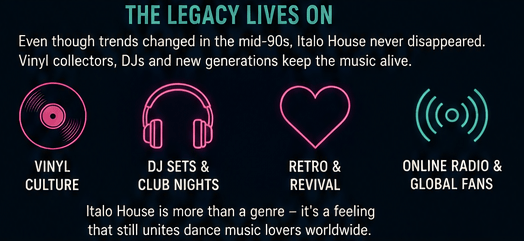
Despite losing mainstream dominance, Italo House never truly disappeared. Underground DJs, vinyl collectors, Balearic selectors, and retro dance enthusiasts continued preserving classic Italian house records throughout the decades.
Many original Italo House tracks remained popular in Ibiza, oldschool club nights, beach festivals, and specialist dance radio shows dedicated to classic European club music.
The genre also became highly collectible among vinyl enthusiasts. Original pressings from labels such as DFC, UMM, Media Records, and Underground Records became sought-after items among DJs and electronic music collectors worldwide.
During the 2000s and 2010s, a new generation of producers rediscovered the emotional piano riffs, uplifting chord progressions, soulful vocals, and Balearic atmospheres that had defined classic Italian house music. Modern house, nu-disco, and retro-inspired dance productions frequently borrowed elements from the original Italo House era.
Italo House Today
Today, Italo House continues to influence modern dance music. Younger producers often rediscover the genre because of its:
- Warm analog sound
- Timeless piano riffs
- Emotional melodies
- Soulful vocals
- Positive atmosphere
- Classic club energy
Vintage Italo House vinyl records have become highly collectible among DJs and electronic music fans.
Today, the influence of Italo House can still be heard in modern Piano House, melodic house, vocal house, Balearic music, and nostalgic dance productions. Many classic tracks continue receiving airplay on specialist dance stations and online radio platforms such as MixPerfect Radio, where the golden age of Italian dance music remains alive for both longtime fans and newer generations discovering the genre for the first time.
Why Italo House Still Matters Today
Italo House remains one of the most influential European dance genres of all time.
The genre helped:
- Bring house music into mainstream Europe
- Shape early rave culture
- Influence Piano House and Progressive House
- Create the foundations of Eurodance
- Define the sound of Ibiza summers
- Popularize melodic house music on radio
- Introduce emotional piano house to global audiences

Even decades later, the emotional energy of classic Italo House still feels timeless. Its uplifting piano riffs, soulful vocals, and Mediterranean atmosphere continue inspiring DJs, producers, collectors, radio presenters, and dance music fans worldwide.
For many listeners, Italo House represents more than just a dance genre - it represents an unforgettable era of clubs, radio stations, beach parties, underground DJs, and euphoric summer nights filled with melodic Italian dance music.
