
Sabadell Sound Radio: The Spanish Italo Disco Phenomenon of the 1980s
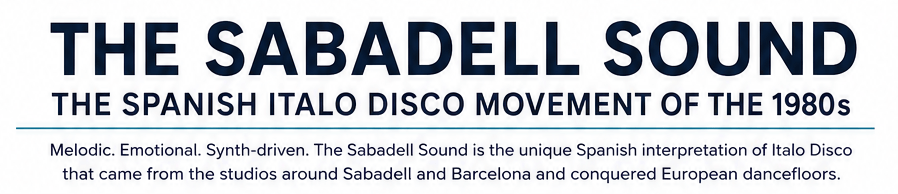
Sabadell Sound - also referred to as Spanish Italo Disco, Italo Disco from Spain, Catalan Hi-NRG, or sometimes Spanish Euro Disco - is a distinctive and predominantly upbeat and joyful regional movement that emerged in the mid-1980s in Catalonia, Spain. Centered around the city of Sabadell, this sound combined the emotional melodies of Italo Disco with Spanish production energy, often featuring English lyrics with a strong accent and highly melodic synthesizer arrangements.
From its earliest days, the movement received significant exposure through radio and DJ culture rather than mainstream promotion. In Spain, regional FM stations and influential dance programs helped bring tracks by artists such as David Lyme, Squash Gang, and Alan Cook into rotation within the emerging dance scene. Internationally, niche European dance radio stations and import DJ shows in countries like the Netherlands, Belgium, Germany, and the UK also picked up these records, often categorizing them simply as Italo Disco or Hi-NRG. MixPerfect Radio continues to keep this energetic style alive for retro dance audiences.
Quick Summary: Sabadell Sound
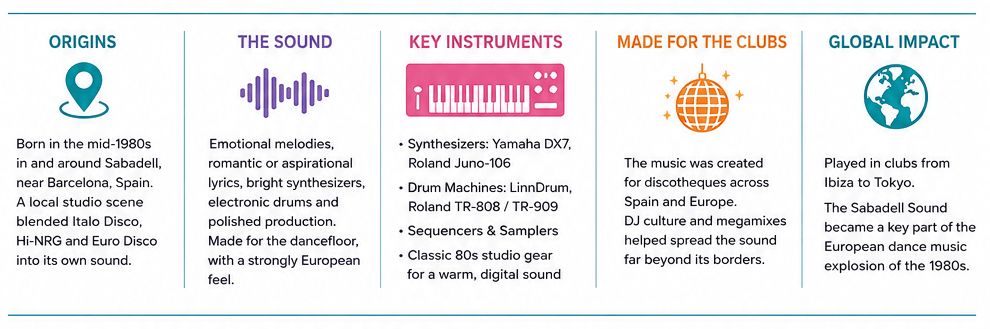
- Origin: Sabadell Sound, also known as Spanish Italo Disco, Italo Disco from Spain, Catalan Hi-NRG, and Spanish Euro Disco, emerged in Catalonia in the mid-1980s as Spain developed its own interpretation of the European electronic disco movement.
- Sound: A highly melodic and predominantly upbeat style combining emotional synth melodies, simple but catchy song structures, electronic drums, and expressive English-language vocals with a distinctive Mediterranean feel.
- Golden Era: The peak of the movement took place during the mid-to-late 1980s, driven by studio productions, club DJs, radio airplay, and the rise of Spanish dance labels.
- Key Drivers: Labels such as Max Music and Blanco y Negro Music, along with compilation series like Max Mix and Bolero Mix, played a crucial role in shaping and exporting the sound across Europe.
- Global Impact: The genre spread throughout Europe, especially in Italy, Germany, the Netherlands, Belgium, the United Kingdom, and parts of Latin America, often being categorized simply as Italo Disco or Hi-NRG.
- Unique Style: Known for its studio-driven production approach, use of session vocalists, polished but synthetic sound design, and its strong association with megamix culture and 12-inch vinyl releases.
- Influence: Helped lay the groundwork for later Spanish electronic styles such as Makina and contributed to the evolution of Eurodance, Euro House, and modern Italo Dance revival scenes.
- Today: Still preserved through vinyl collecting, DJ sets, reissues, and specialist radio stations such as MixPerfect Radio, keeping the legacy of Spanish Italo Disco and Catalan Hi-NRG alive for new generations.
Radio Stations and Broadcast Culture
Radio played a crucial role in shaping and exporting Sabadell Sound. During the 80s, Spanish FM stations in Catalonia and Madrid regularly featured dance programs that showcased local productions alongside imported Italian and German disco records.
Key Spanish outlets included regional stations in Catalonia such as Barcelona-area FM broadcasters, which were heavily influenced by club DJs and the emerging Max Music and Blanco Y Negro catalogues. These stations helped turn local productions into national hits.
Outside Spain, pirate radio stations in the United Kingdom, Dutch offshore stations, and Belgian dance programs contributed to spreading these tracks across Europe. Many listeners at the time did not distinguish the genre from Italo Disco - they simply experienced it as uplifting European club music with strong melodic hooks.
In modern times, retro-focused online stations have revived the genre. Among them, MixPerfect Radio and Radio Stad Den Haag plays an important role in preserving the legacy of Italo Disco, Euro Disco, and related Spanish productions from this era.
Origins and International Spread of Hi-NRG,
The origins of Italo Disco from Spain can be traced back to the early-to-mid 1980s, when Spanish producers began imitating and reinterpreting the booming Italian Italo Disco scene. Influenced by synthesizer-driven European dance music, producers in Catalonia started creating tracks with similar structures: catchy choruses, electronic drums, and emotional melodies.
Unlike Italy, where Italo Disco evolved more organically from disco and electronic pop, the Spanish version was often more studio-driven. Many projects were assembled by producers and session vocalists rather than traditional bands, giving the movement a polished but sometimes “manufactured” feel that was typical of the era’s commercial dance production.
Labels such as Max Music and Blanco y Negro Music played a central role in defining and exporting this sound. Max Music in particular became known for its influential Max Mix compilation series, which helped introduce Spanish Italo Disco to international audiences through continuous DJ-style megamixes.
International distribution was further strengthened through licensing networks such as ZYX Music, a German label that played a major role in reissuing and promoting Italo Disco and Euro Disco across Europe. Through compilations and licensed releases, Spanish productions reached markets in Germany, Netherlands, Scandinavia, and beyond, where import dance music had a strong following.
While Sabadell Sound was primarily a Spanish phenomenon, its influence quickly spread across Europe. The genre became especially popular in:
- Spain (especially Catalonia and Madrid club scenes)
- Italy (as part of the broader Italo Disco movement)
- Germany (via ZYX compilations and DJ culture)
- Netherlands and Belgium (Hi-NRG and Euro Disco crossover scenes)
- United Kingdom (through pirate radio and club DJs)
In Latin America, particularly Argentina, these tracks also found an audience within broader disco and Hi-NRG scenes, often without strict genre classification.
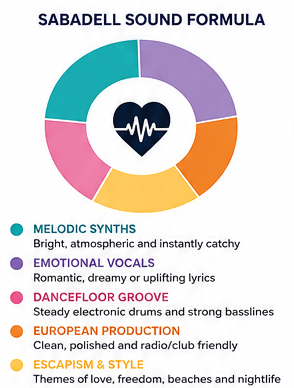
The Sound Design Formula: Synths and Machines Behind the Spanish Disco Sound
The sound of Spanish Italo Disco - was heavily shaped by the digital revolution in 1980s studio technology.
Producers in Barcelona studios relied on a combination of analog warmth and early digital precision. The most commonly used instruments included the Roland Juno-106, Yamaha DX7, LinnDrum, and Roland TR-808 drum machines.
This combination created the signature bright basslines, emotional pads, and sharp electronic percussion that defined the genre’s uplifting and energetic character.
International Spread Through DJ Mix Culture and Compilations
One of the key reasons Italo Disco from Spain gained international recognition was the rise of professionally produced DJ megamixes and compilation albums during the mid-to-late 1980s.
The most influential of these was the legendary Max Mix series, produced in Spain by Max Music. The series was created and mixed by pioneering Spanish DJs and producers such as José María Castells, Tony Peret, Mike Platinas, and Javier Ussia, who played a central role in shaping the megamix culture of the 1980s. These mixes combined dozens of Italo Disco, Hi-NRG, and Spanish dance tracks into continuous DJ-style megamixes. This format made it easier for international audiences to discover Spanish productions in a single listening experience, rather than as isolated singles.
Alongside this, German label ZYX Music played a major role in spreading the sound across Europe. ZYX specialized in licensing and reissuing Italo Disco and Euro Disco material, including many Spanish productions. Through their extensive compilation catalog, Spanish artists and studio projects reached audiences in Germany, Scandinavia, and other parts of Europe where import dance music had a strong market.
Together, these compilation-driven distribution channels helped transform or Catalan Hi-NRG from a regional Spanish movement into a recognizable part of the wider European Italo Disco and Hi-NRG landscape.
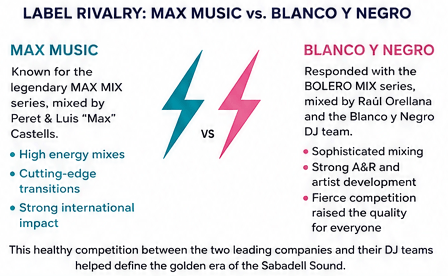
Max Music vs Blanco y Negro: The Rivalry That Shaped Spanish Dance Music
Two Barcelona-based labels dominated the Sabadell Sound era: Max Music and Blanco y Negro Music. Their competition fueled innovation in artist development, record releases, remixing, and compilation culture, helping shape the direction of Spanish electronic dance music during the 1980s.
Max Music became widely known for its influential Max Mix series and for promoting numerous dance artists and studio projects. Blanco y Negro responded with its own successful releases and compilation concepts such as Bolero Mix. Their rivalry extended far beyond megamixes, influencing which artists were signed, how tracks were marketed, and how Spanish dance music reached audiences across Europe.
Key Artists of Catalan Hi-NRG
David Lyme
One of the most iconic figures of the Sabadell Sound movement, David Lyme (real name: Jorge Cubino Bermejo), became one of the most recognizable Spanish voices in the Italo Disco era of the 1980s.
He rose to prominence with a series of highly influential tracks including Bambina, Bye, Bye, Mi Amor, Playboy, and Let’s Go to Sitges. These releases defined the melodic and romantic side of Spanish Italo Disco, combining catchy vocal hooks with glossy synthesizer-driven production.
Interestingly, Let’s Go to Sitges was later reinterpreted in alternative versions such as Let’s Go to Canarias and Let’s Go to Lloret. This reflected a common production strategy in 1980s European dance music, where successful tracks were adapted into different regional “holiday destination” variations to maximize commercial appeal while reusing proven musical structures.
Before entering the Italo Disco scene, he originally studied and performed opera, and reportedly discovered electronic dance music almost by chance. He later became one of Spain’s most internationally recognized Italo Disco artists and even achieved chart success in Japan, where his music gained unexpected popularity and led to television performances on Japanese music shows.
Many of his recordings were produced under the influential Max Music label, one of the most important Spanish dance music companies of the 1980s, alongside Blanco y Negro Music. He also collaborated with other artists in the scene, including connections with international Italo Disco figures such as Silver Pozzoli (also visible in the video above).
Outside of his performing career, David Lyme also worked as a fashion model during the peak of his popularity.
Today, David Lyme remains one of the most important names associated with the Spanish Italo Disco legacy.
Squash Gang
Squash Gang was one of the most recognizable projects within the Spanish Italo Disco movement of the 1980s. The project was formed by musician Francisco Quijada, together with vocalists José Quijada (his brother) and Cristina Manzano.
They were signed to the influential Spanish dance label Blanco y Negro Music, one of the key companies behind the development and international distribution of Spanish Euro Disco and Hi-NRG productions during the 1980s.
Squash Gang became best known for their 1986 hit I Want an Illusion, a track widely regarded as one of the defining releases of the Sabadell Disco era. The song is built around melodic synthesizers, emotional vocals, and a distinctly European club arrangement that made it popular in DJ sets and compilation mixes across Europe.
The track has often been highlighted by collectors and DJs as a reference point for the genre. While some listeners associate it with Italo Disco, others have debated its classification, with many agreeing it represents a distinct Spanish interpretation of the broader European Hi-NRG and Euro Disco sound.
I Want an Illusion has also seen multiple reissues over the years, including versions featuring the original mixes and a Special Remix that circulated in various European markets shortly after the original release. These reissues reflect the continued demand for classic Spanish Disco material among collectors and DJ communities.
Beyond their 1980s success, Squash Gang experienced a revival in the 2000s and 2010s, releasing new material such as When I Close My Eyes (2009) and Hey You (2011). Their catalog continues to be reissued and rediscovered through vinyl culture and online platforms such as Discogs, where their original releases remain highly sought after.
Today, Squash Gang is considered one of the key names associated with the Sabadell Music legacy, bridging the gap between Spanish studio-driven dance production and the wider European Italo Disco movement.
Alan Cook
Alan Cook was one of the key vocal acts within the Sabadell Sound and Spanish Italo Disco scene of the 1980s. The project was performed by Xavier Carbó, a singer and musician born in Tarragona, near Barcelona. He studied music at a conservatory at a young age and later developed as a guitarist and live performer in Barcelona’s nightclub circuit before becoming involved in studio-driven dance productions.
Like many Italo Disco and Spanish Euro Disco projects of the era, Alan Cook was not a traditional band but a studio concept built around producers and session musicians. The stage name was chosen for its international appeal and was loosely inspired by explorer Captain Cook, fitting the exotic and escapist image often used in 1980s dance music marketing.
His breakthrough came with Do You Want to Stay (1985), one of the defining tracks of the early Sabadell Sound movement. The song became a staple of Spanish dance compilations and was widely distributed through the influential Max Mix megamix series, helping it reach audiences across Europe.
This was followed by a series of key releases that strengthened his position in the Spanish Italo Disco catalog, including Bad Dreams (1986), Running Away (1987), and I Need Somebody to Love Tonight (1988). These tracks continued the emotional, synthesizer-driven style typical of the Spanish Italo Disco era, blending melodic hooks with soft electronic arrangements and expressive vocals.
After the peak of the 1980s Italo Disco wave, Alan Cook eventually stepped away from the original studio projects but later returned with new material. In the 2010s, he released tracks such as Don’t Give Up (2010) and Casablanca Nights (2012), showing a clear continuation of his melodic Euro Disco-inspired style with a more modern production approach.
Throughout his career, his work remained closely connected to the Spanish dance music ecosystem, including collaborations with producers associated with labels like Max Music. His productions often featured classic 1980s studio tools such as Yamaha DX7 synthesizers and early drum machines, which helped define the warm and emotional sound characteristic of Italo Disco from Spain.
Today, Alan Cook is remembered as one of the authentic vocal voices of Spanish Italo Disco, bridging the original 1980s Catalan Hi-NRG movement with later Euro Disco revival productions in the 21st century.
Kristian Conde
Kristian Conde is one of the most distinctive voices associated with the genre. Based in Barcelona, he emerged during a period when Spain was rapidly developing its own interpretation of the Italo Disco and Hi-NRG sound, driven by studio production teams and dance-focused record labels.
His most iconic release is Dolce Vita, a track that became a defining example of Spanish Italo Disco production. The song is widely recognized not only for its melodic and emotional synth-driven arrangement, but also for its strong international appeal, which helped it circulate across European club scenes and DJ compilations.
A key detail in its production is that Dolce Vita was arranged by David Lyme (Jordi Cubino) in collaboration with Jordi Cubino’s production circle, linking the track directly to the core Sabadell Sound studio ecosystem and the influential Max Music production environment.
In 1989 the song also gained international attention through a cover version by Donnee Grillo, showing how Spanish Italo Disco productions were being adapted and reintroduced into other markets under different interpretations. This reflects the broader international circulation of European dance music during the late 1980s.
Musically, Kristian Conde’s work sits between Italo Disco, Spanish Euro Disco, and early Hi-NRG, characterized by emotional vocals, simple but effective synth melodies, and a strong club-oriented structure. His recordings reflect the studio-driven production style typical of the Euro Disco from Spain era, where producers and arrangers played an equally important role as performers.
In an interview with Conde, he has described his artistic background as deeply rooted in a creative family environment. He was exposed to performing arts from a young age and explored multiple disciplines including music, dance, fashion, and visual arts before focusing on electronic music production. This multidisciplinary background influenced his expressive performance style and artistic identity.
He has also highlighted the importance of Ibiza and international club culture in shaping his musical direction. Exposure to global dance scenes and artists associated with Hi-NRG and early electronic club music helped him refine a more international sound approach, moving beyond purely local Spanish production styles.
Following his initial success in the 1980s, Kristian Conde continued to evolve artistically, moving between Spanish-language and international electronic music projects. His later work reflects a shift toward modern electronic production techniques while maintaining the melodic sensibility of his earlier material.
Today, Kristian Conde is regarded as one of the cult figures of the genre. His work on Dolce Vita remains a key reference point in Spanish Italo Disco history and continues to be rediscovered through vinyl reissues, DJ compilations, and retro electronic music collections.
Essential Tracks of the Sabadell Sound and Spanish Italo Disco Era
Alongside the above mentioned artists, the Spanish Italo Disco scene produced a large number of cult classics and underground favorites. Many of these tracks were distributed through labels like Max Music, Key Records, and Blanco y Negro, and gained popularity through DJ sets, megamixes, and compilation series such as Max Mix, Disc Jockey Mix and Bolero Mix.
| Artist | Track | Label | Year | Importance |
|---|---|---|---|---|
| David Lyme | Bambina | Max Music | 1985 | Breakthrough hit defining the genre |
| Squash Gang | I Want an Illusion | Blanco y Negro | 1986 | Emotional synth classic of the movement |
| Alan Cook | Do You Want to Stay | Max Music | 1985 | Core example of studio-driven production |
The following selection represents some of the most notable and frequently referenced releases from the 80s, often played in clubs or featured on Italo Disco compilations:
- Closed - Living in Your Eyes
- Lenroy - Everytime
- Gino - Everybody's Chic
- Latin Rose - Everybody Is Gay
- Ivan - Baila
- Xalan - I Only Move for Money
- Brian and the Eden - Sonsy Girl
- Vicio Latino - ¿Sabes Que Hora Es?
- Steve Clark - No More Love
- Franz & Frankie - Heavenly Vice
- Fresh - The Wolf
- Mata Hari - Mata Hari
- Charly Danone - Ed Lo Ti Troverò
- Julia Claire - A Summer Romance
- Daydream - In the Night
- Green Ice - Gigolo
- Norman - Let's Go to the Beach
- Mister X - It's O.K.
- Jules Tropicano - Come On
- Marce - I Want You
Many of these productions share the characteristic Sabadell Sound formula: melodic synthesizer leads, simple but emotional lyrics, and a strong focus on dancefloor energy rather than traditional pop structure. While some tracks achieved modest chart success, most became cult favorites through DJ culture and later rediscovery in Italo Disco and Euro Disco revival communities.
Today, these records are frequently sought after by collectors and continue to appear in vinyl reissues, DJ sets, and retro compilations, preserving their place in the broader history of Spanish electronic dance music.
Influential Labels Behind the Sound
Max Music
One of the most important Spanish dance labels of the 1980s, Max Music was instrumental in shaping Sabadell Sound. It specialized in Italo Disco, Hi-NRG, and early Eurodance. The label also produced the famous “Max Mix” compilations, which helped bring DJ megamix culture to a wider audience.
Blanco y Negro Music
Blanco y Negro became another cornerstone of the Spanish dance industry. It released many classics and helped distribute Spanish Italo Disco across Europe, often focusing on polished, radio-friendly productions.
Don Disco & Indalo Music
Smaller but influential labels like Don Disco and Indalo Music contributed to the diversity of the scene, releasing numerous club-oriented singles that supported the underground dance culture in Spain.
Evolution and Influence on Later Genres
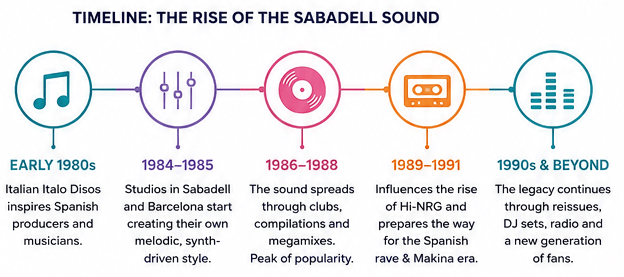
Disco Music from - and around - Sabadell played an important transitional role in the evolution of European electronic dance music. As Italo Disco faded in the early 1990s, its Spanish variants helped shape several new genres.
Most notably, Sabadell-influenced production techniques contributed to the rise of:
- Mákina - a faster, harder Spanish rave style that emerged in the 1990s
- Eurodance - combining pop vocals with electronic beats
- Italo Dance - a more modern continuation of melodic Italo-inspired music
- Euro House - blending club beats with melodic European production
The emotional synthesizer-driven approach can still be heard in modern retro revival scenes and DJ sets across Europe.
From Sabadell to Valencia: Influence on the Ruta del Bakalao
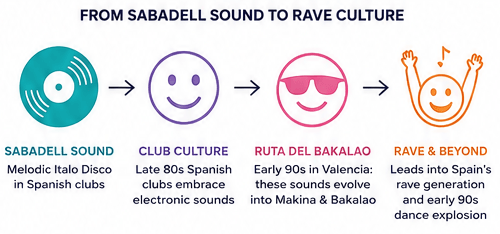
While Sabadell Disco originated in Catalonia, its influence extended south to Valencia, where it played a key role in shaping the early club culture known as La Ruta del Bakalao.
In the late 1980s, DJs in clubs such as Barraca, Chocolate, and Spook Factory often played Italo Disco and Spanish Euro Disco records at increased tempos, creating a bridge between melodic 80s dance music and the harder Makina and Bakalao sounds of the 1990s.
This transition marks the genre as an important precursor to Spain’s early rave culture.
Sabadell Disco Music on Radio: Then and Now
During its peak, Happy disco sound from Spain owed much of its success to radio airplay. DJs used extended maxi-singles and megamixes to keep energy high on dance-oriented programs. Radio stations acted as a bridge between club culture and mainstream audiences.
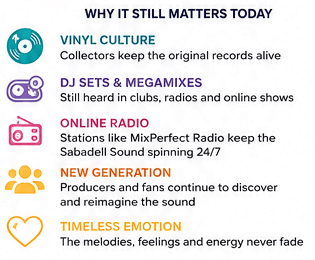
Today, the genre continues to live on through digital radio stations and retro platforms. MixPerfect Radio is one of the modern outlets that preserves this heritage by broadcasting classic Italo Disco, Spanish Euro Disco, and Sabadell Sound productions alongside related Eurodance classics.
This continued radio presence ensures that the genre remains accessible not only to collectors and DJs but also to new generations discovering 1980s European dance music.
Final Thoughts
The 1980s Spanish Italo Disco sound remains one of the most fascinating regional interpretations of Italo Disco. Born in Catalonia and shaped by producers, radio stations, and independent labels, it represents a unique blend of Mediterranean melody, electronic innovation, and commercial dance ambition.
Whether referred to as Spanish Italo Disco, Italo Disco from Spain, or Catalan Hi-NRG, its legacy continues to influence modern electronic music genres. From radio airwaves in the 1980s to online stations today, its sound remains a vibrant part of European dance music history.
